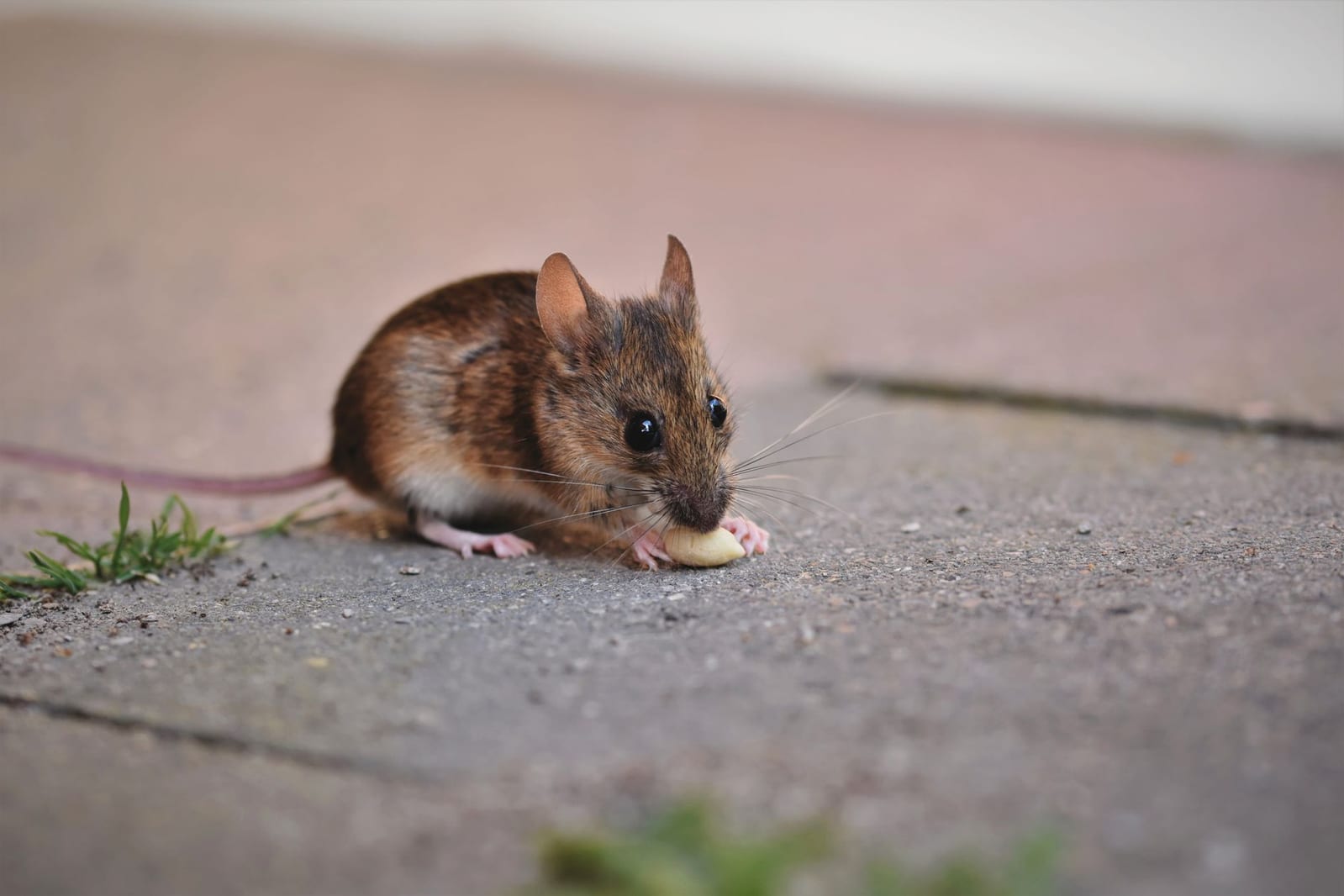
Every NYC rat call starts the same way for us: confirm the species before doing anything else. The Norway rat (Rattus norvegicus) — grey-brown, blunt nose, tail shorter than its body — is the rat behind nearly every infestation in the five boroughs. It burrows into soil, foundation gaps, and building voids rather than nesting in attics or rooflines, which shapes everything about where we look and how we treat.
A real inspection takes time. We check for fresh burrow entrances (pale, recently turned soil with no cobwebs or debris at the opening), fresh droppings (dark, moist, slightly glossy — versus dull, crumbling older droppings), grease rub marks along low, regularly-used runs, and gnaw marks on soft concrete or wood. That's how we tell an active colony from an old, abandoned one, and it's the difference between a targeted treatment and guesswork.
Bait and trapping knock down the population you can see. Exclusion — sealing every gap a rat can fit through, roughly half an inch, and every one a mouse can fit through, about a quarter inch — is what stops the next wave from moving in. We do both, in that order, on every job.
What every NYC property owner should know about rats — and the City rules that govern them
NYC's Health Department designates Rat Mitigation Zones — neighbourhoods with high rat activity, like Harlem since January 2023 — where City agencies concentrate abatement resources. Residents report rats and check a property's inspection history through 311 and the Health Department's Rat Information Portal, so a documented professional programme is what keeps a building off the City's radar. (NYC DOHMH — Rat Mitigation Zones)
Under NYC rules, property owners are legally required to keep their properties rat-free and fix the conditions that attract rats. The Health Department states that when owners do not meet this legal requirement, tenants can report the problem through 311 and the Department sends inspectors to investigate — so an active infestation is a compliance exposure, not just a nuisance. (NYC DOHMH — Rats: Information for Tenants and Property Owners)
The Health Department's inspection terms set out the enforcement cycle: an Initial Inspection fails on any Active Rat Signs — fresh burrows, runways, rub marks or gnawing — and on harborage such as clutter and dense vegetation, after which a Compliance Inspection follows. That makes removing harborage, not just killing rats, the owner's burden. (NYC DOHMH — Rat Inspections: Terms and Practices)
The CDC's guidance puts exclusion first: mice can squeeze through a gap the width of a pencil — about a quarter inch or 6 millimetres — so small holes should be sealed with steel wool and caulk and larger ones with lath screen, cement or hardware cloth. In old NYC building stock, this seal-up step is what baiting alone cannot replace. (CDC — Seal Up to Prevent Rodents)
Exclusion-first vs baiting-only for NYC rats
| Exclusion-first (seal-up + harborage removal) | Baiting-only | |
|---|---|---|
| Targets the actual NYC violation | Yes — removes the harborage and entry points the Health Department inspects for | No — bait stations do not clear harborage or burrows |
| Stops re-entry through gaps | Yes — seals the pencil-width gaps (CDC) rats and mice follow along walls | No — kills some rats but leaves the openings open |
| Addresses Norway-rat behaviour | Yes — closes the burrows and wall/riser runways they reuse | Partial — burrows and runways stay active |
| Disease-exposure reduction | Higher — fewer rats and less urine contamination (leptospirosis risk per DOHMH) | Lower — contamination persists while the colony rebuilds |
| Durability after treatment | Long-term — physical barriers remain in place | Short-term — survivors and newcomers repopulate |
How much does rat & mouse control cost in NYC?
$200–$1,200
One-time baiting: $200–$500. Exclusion (baiting + entry-point sealing): $400–$900. Ongoing monitoring: $100–$200/month. NYC per-treatment overall: $300–$1,200 (avg ~$475). National per-visit average: $345 (range $216–$495).
| One-time baiting | $200–$500 per treatment |
| Exclusion (baiting + sealing) | $400–$900 per treatment |
| Ongoing monitoring | $100–$200 per month |
Market range — not our quote
This is a market range synthesised from published cost guides — not a quote from this provider. The actual price depends on an in-person or photo-based inspection.
Angi's $345 average (range $216–$495) is the only tier-1, NYC-geo-targeted figure found and is notably lower than the tier-2 NYC blogs' $300–$1,200 claim. Both are shown — do not collapse into a single misleadingly precise number.
What drives the price
- Baiting-only vs full exclusion (sealing entry points)
- Number of visits needed for heavy infestation (3–5 visits can total $700–$1,500)
- Building type / density
- Ongoing monitoring plan vs one-off
Signs you have a rodent control problem
- Fresh burrow holes with pale, loose soil and a worn dirt path leading to and from the entrance
- Droppings that are dark and slightly glossy (fresh) versus dull and crumbling (older, aged colony)
- Grease or rub marks low along foundations, pipes, and baseboards where rats travel the same route repeatedly
- Gnaw marks on soft concrete, wood, or even aluminium — Norway rats chew through more than most people expect
- Scratching or movement in walls or ceilings after dark, when rats are most active
Why Carroll Gardens sees this
The Norway rat's neophobia means a colony avoids new objects — a fresh bait station or exclusion patch — for two to three days before resuming normal movement, which is why a single-visit treatment often fails.
NYC's dominant rat is a burrower, not a climber, so most of our inspection time is spent at ground level and below grade, not checking rooflines and attics the way a general pest company might.